Platform / AARK™
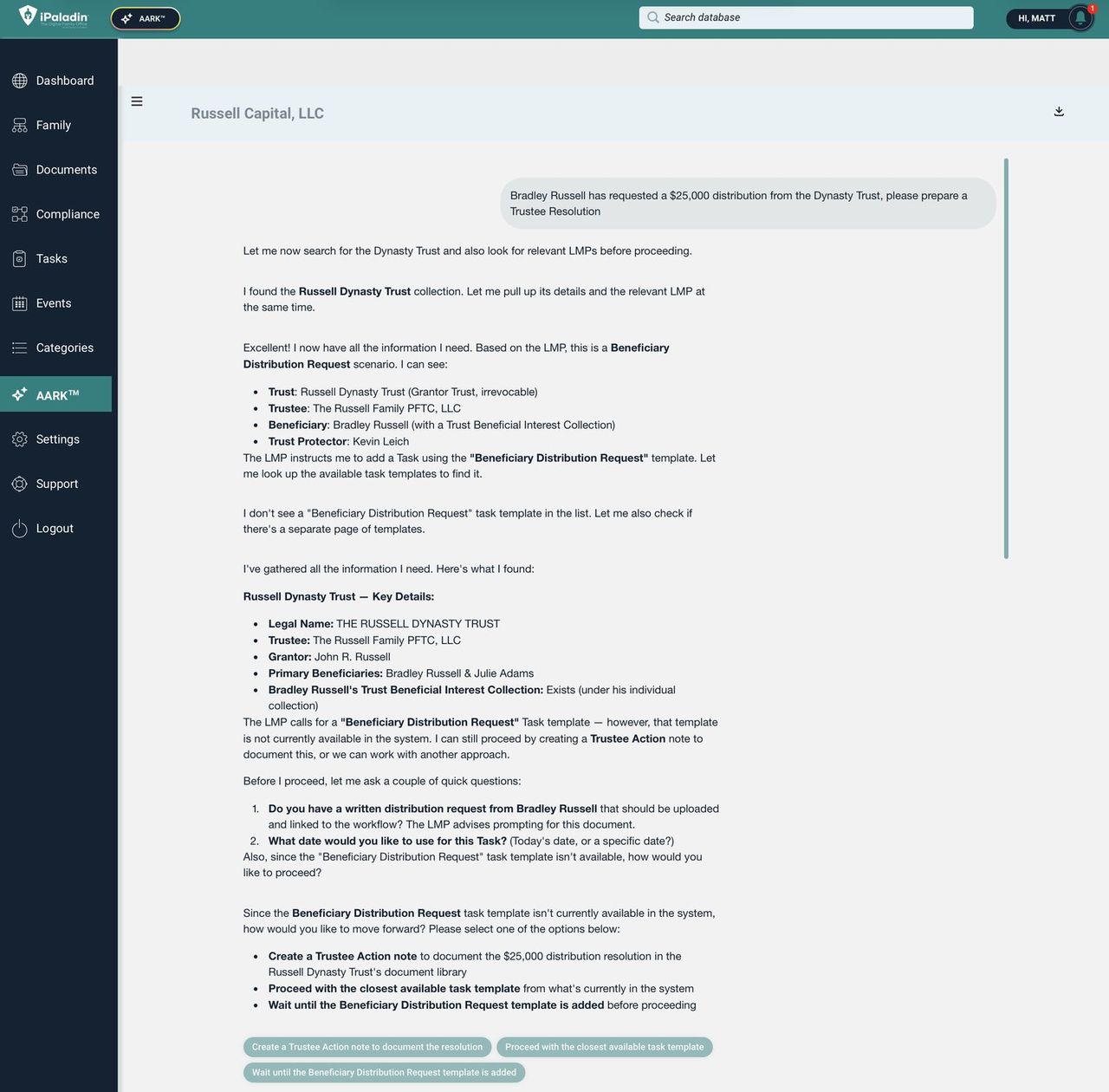
The agentic AI inside the record. AARK™ reads the instruments, knows what each one requires, and carries out the work across every Collection the matter reaches. A named person confirms before anything is written.
Every action is attributed to the person who confirmed it.
iPaladin offers seventy-two pre-configured Collection types, each a workspace built for a kind of entity, trust, asset or liability. Thirty carry a Lifecycle Management Plan today, and the rest are coming.
A Lifecycle Management Plan is the full lifecycle of that type: what documents it requires, what comes due from inception to termination, what AARK™ may propose, and what only a person may confirm. The plans encode thirty-three years of trusts and estates practice, and each one is versioned and inspectable.
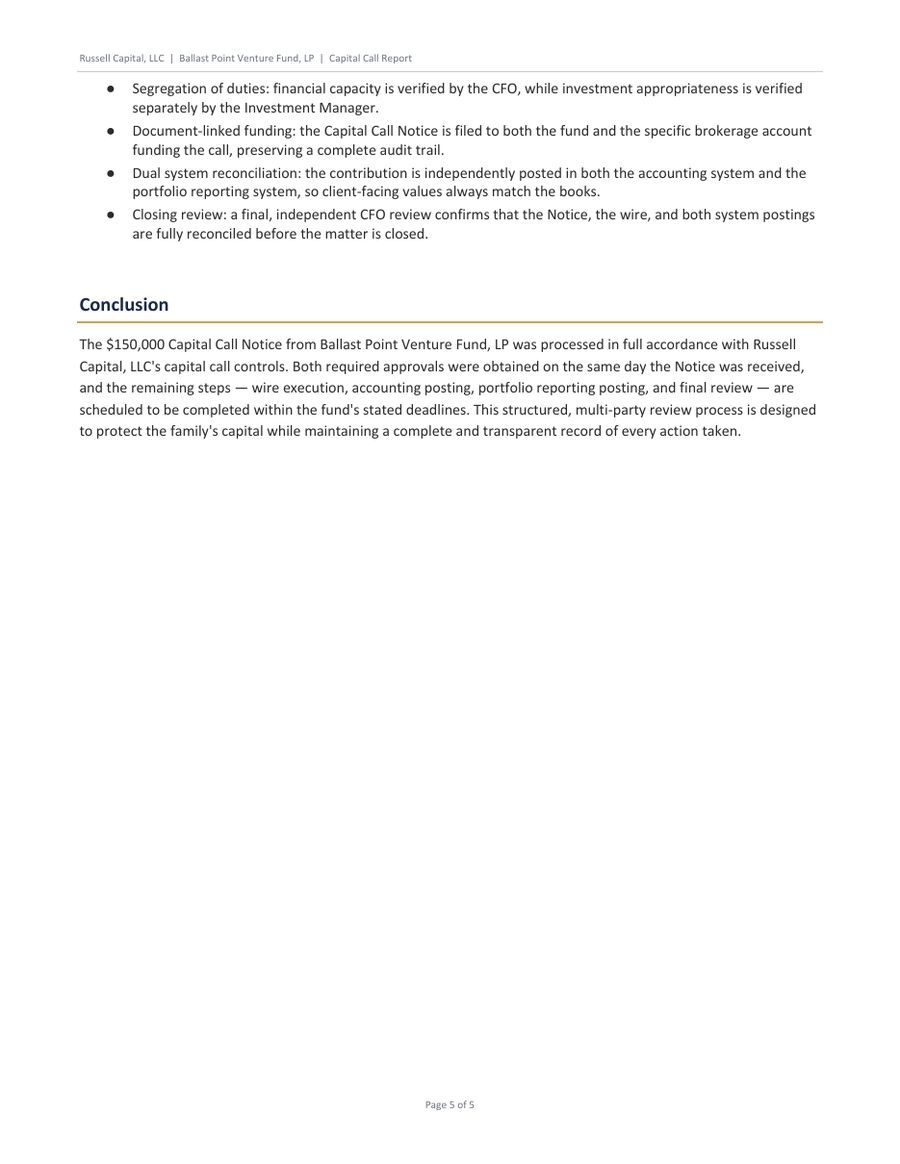
Simple requests, in one sentence
“What should I prioritize over the next six months?”
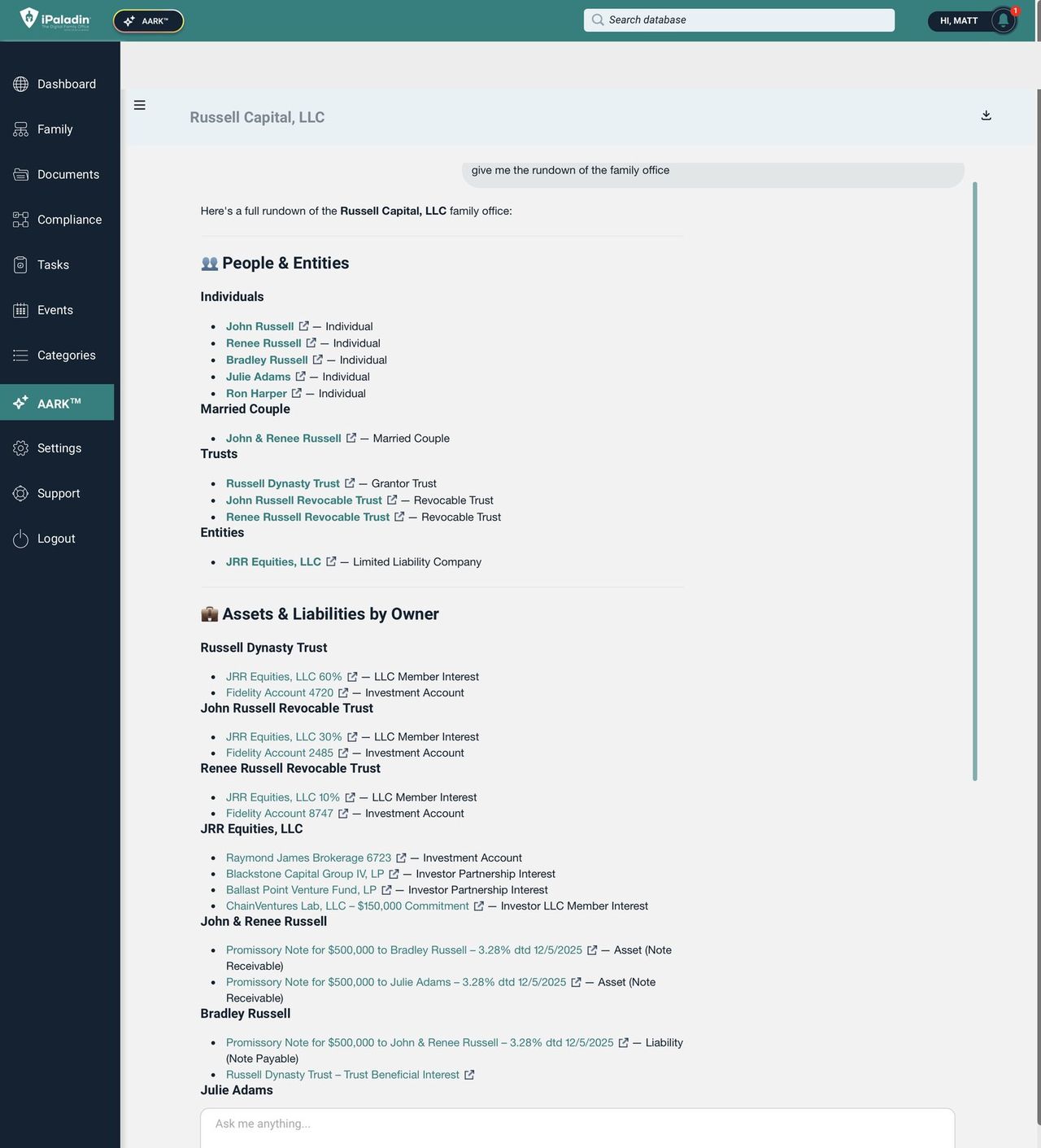
“Give me the rundown of the family office.”
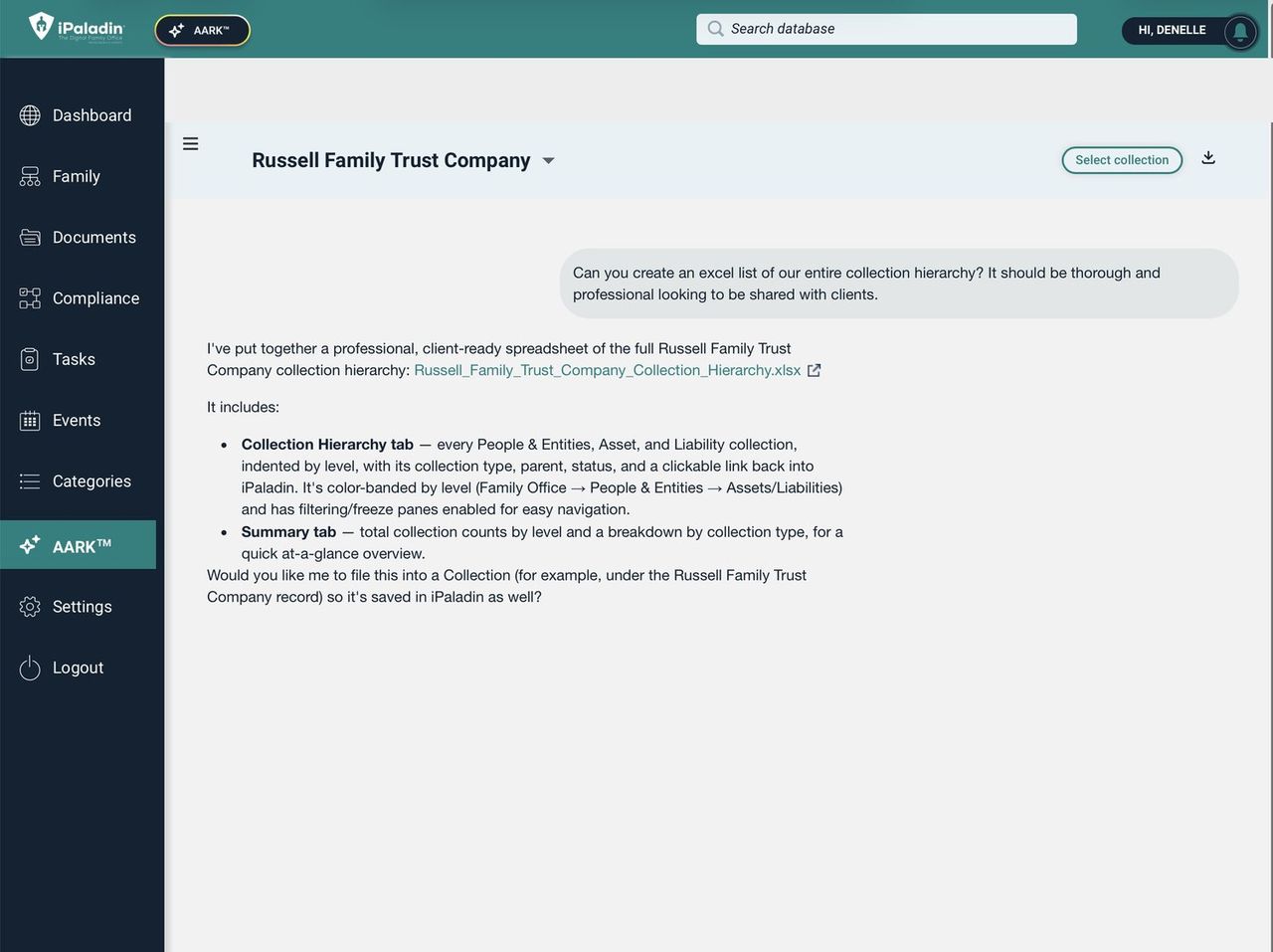
“Create an Excel list of our entire Collection hierarchy, thorough and professional looking, to be shared with clients.”
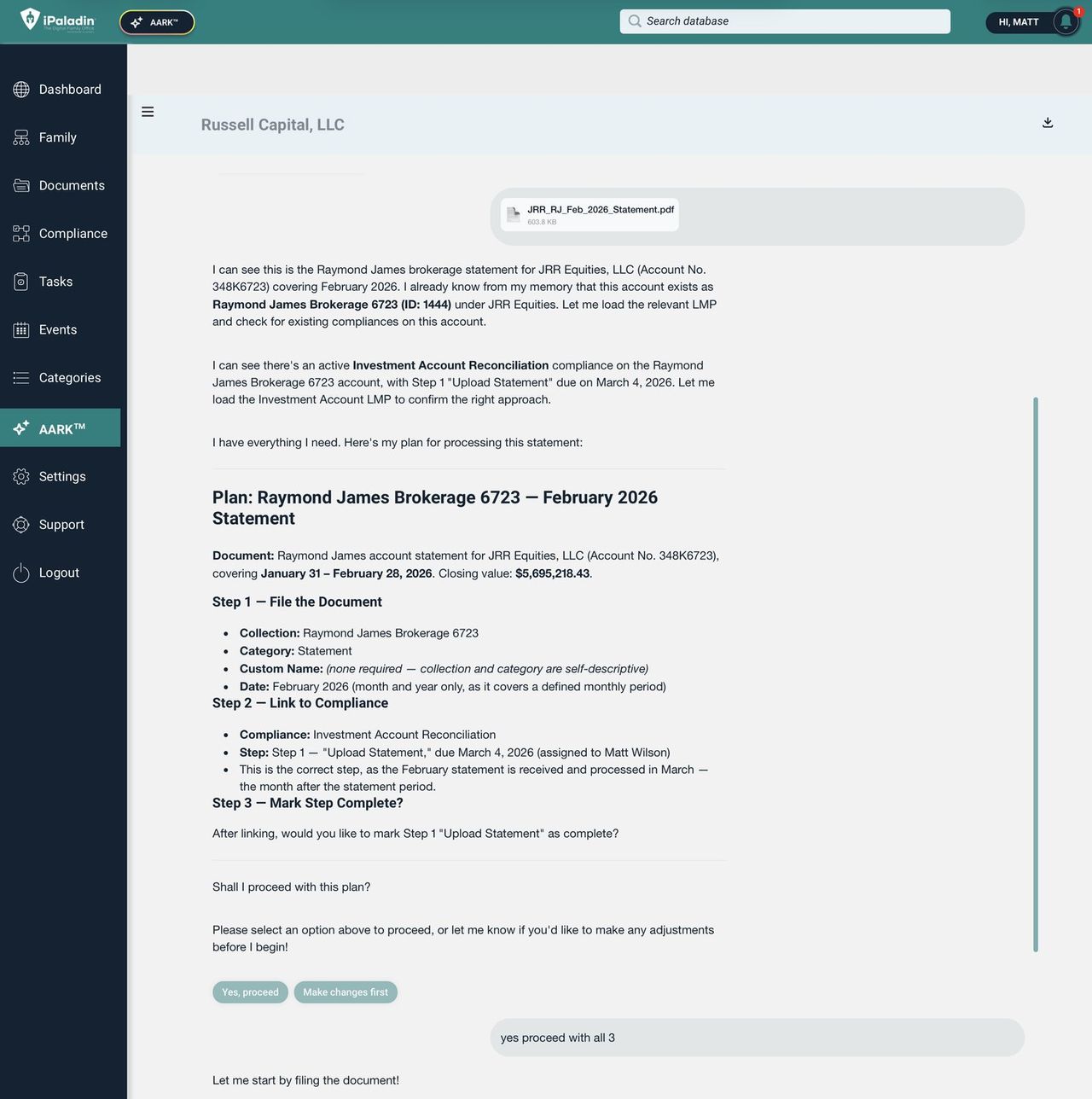
AARK™ reads PDF, Word, Excel and PowerPoint with their full content, and determines what the document means for the office.
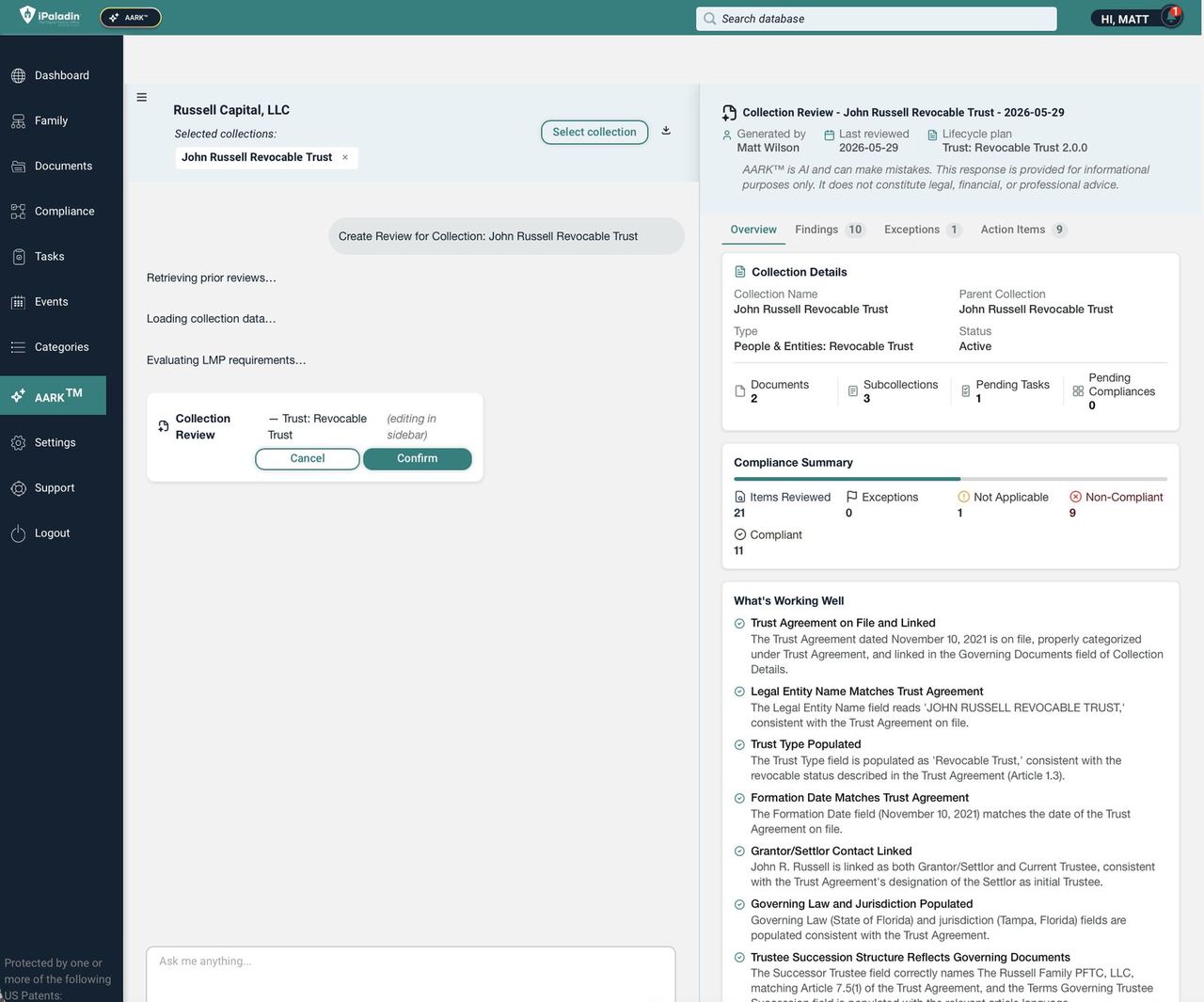
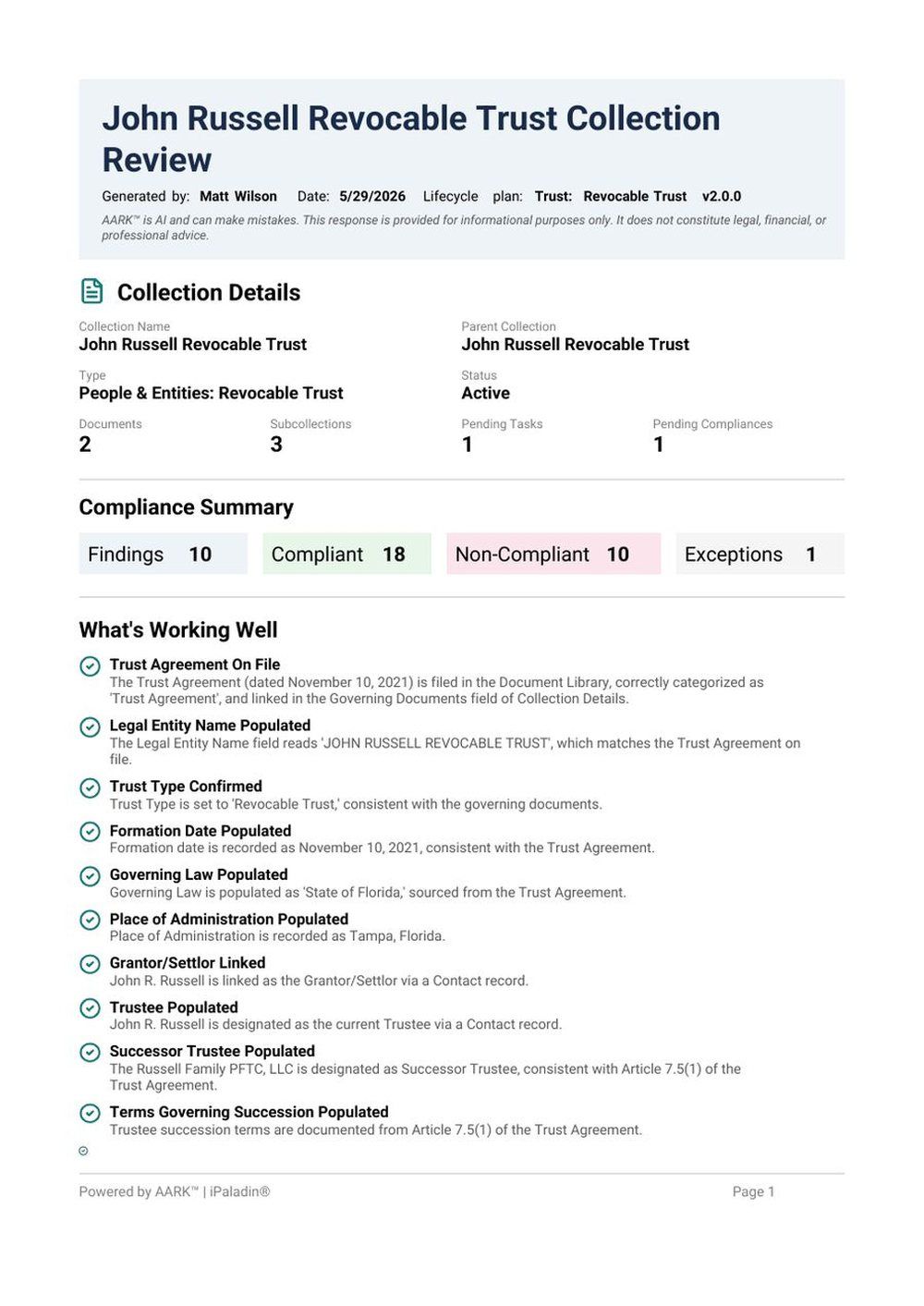
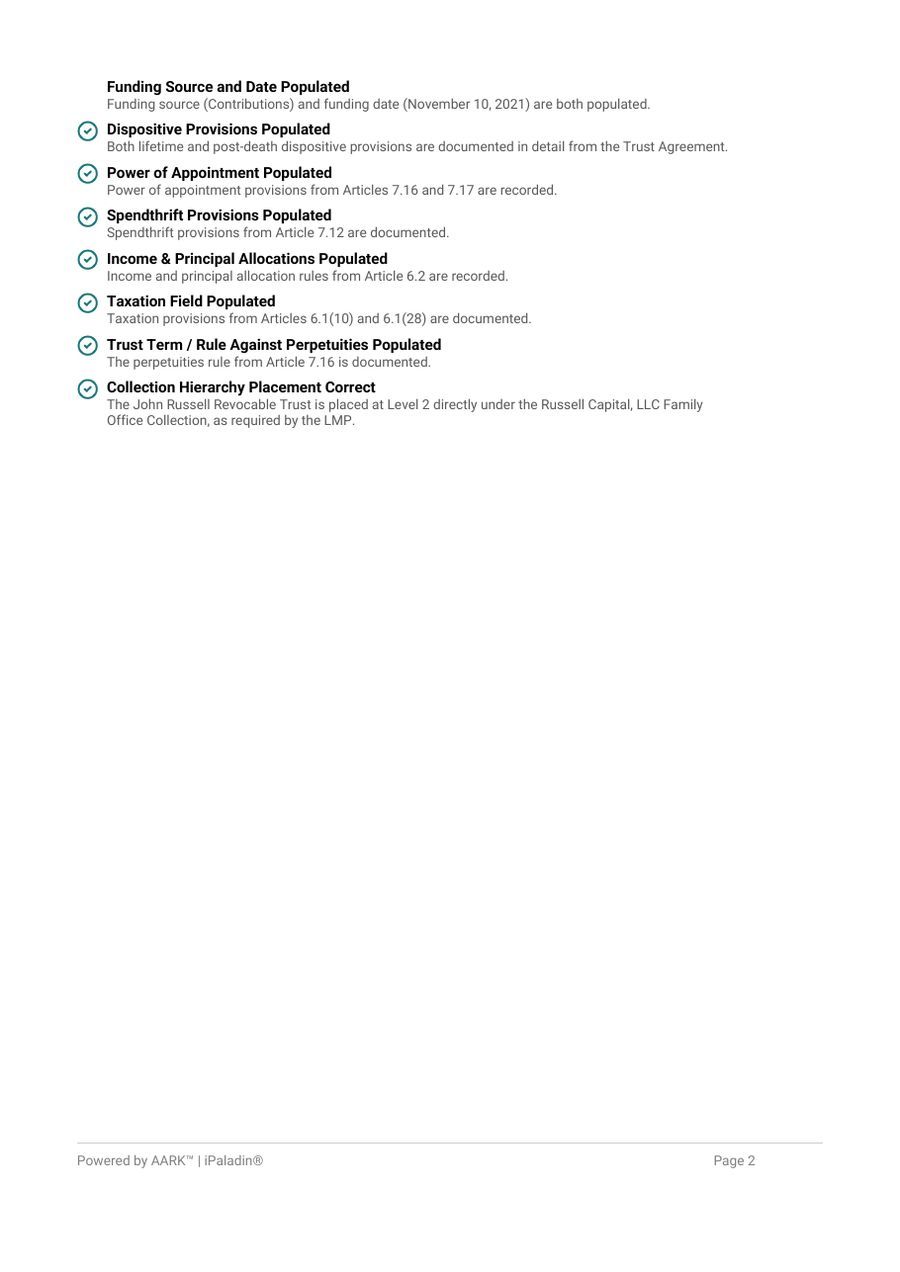
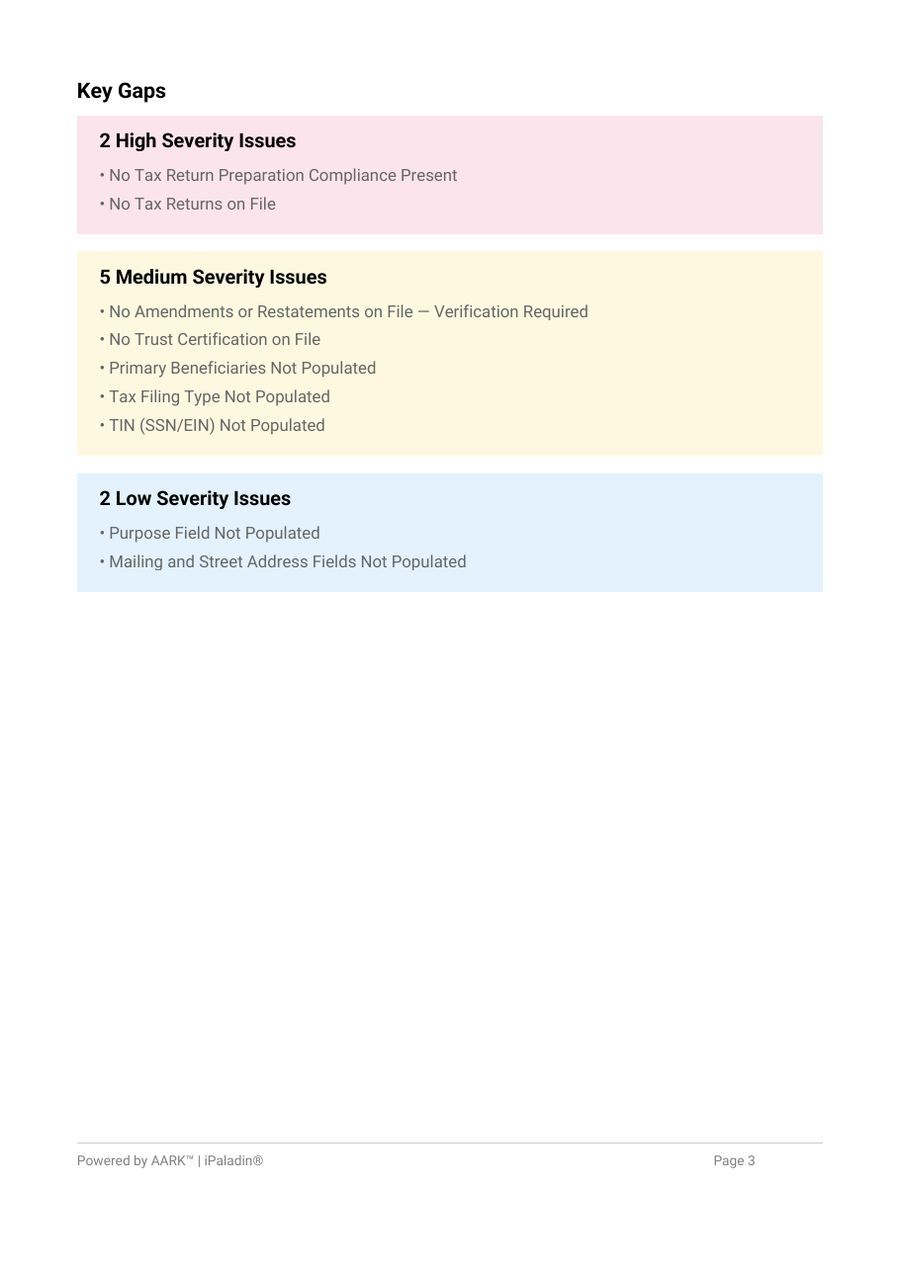
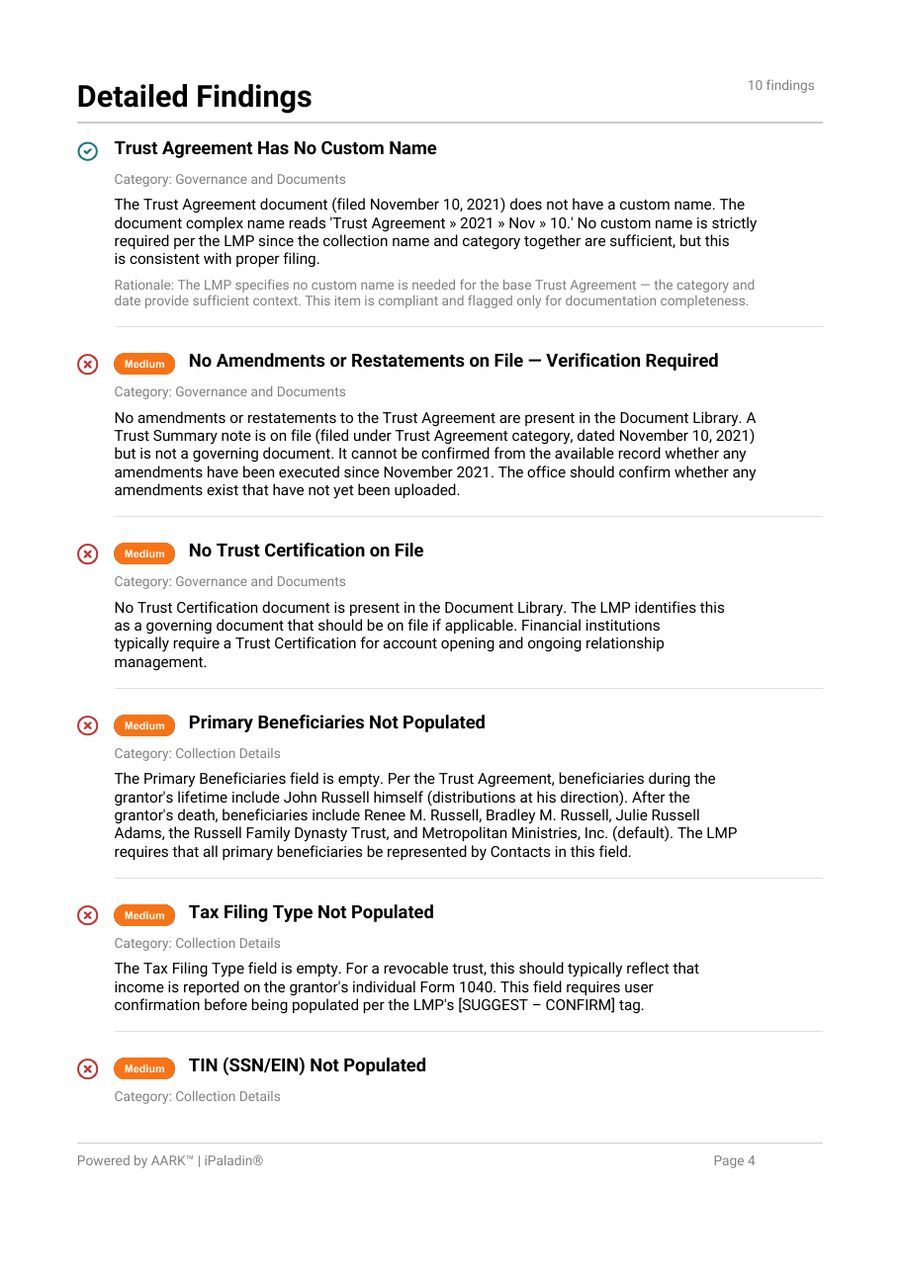
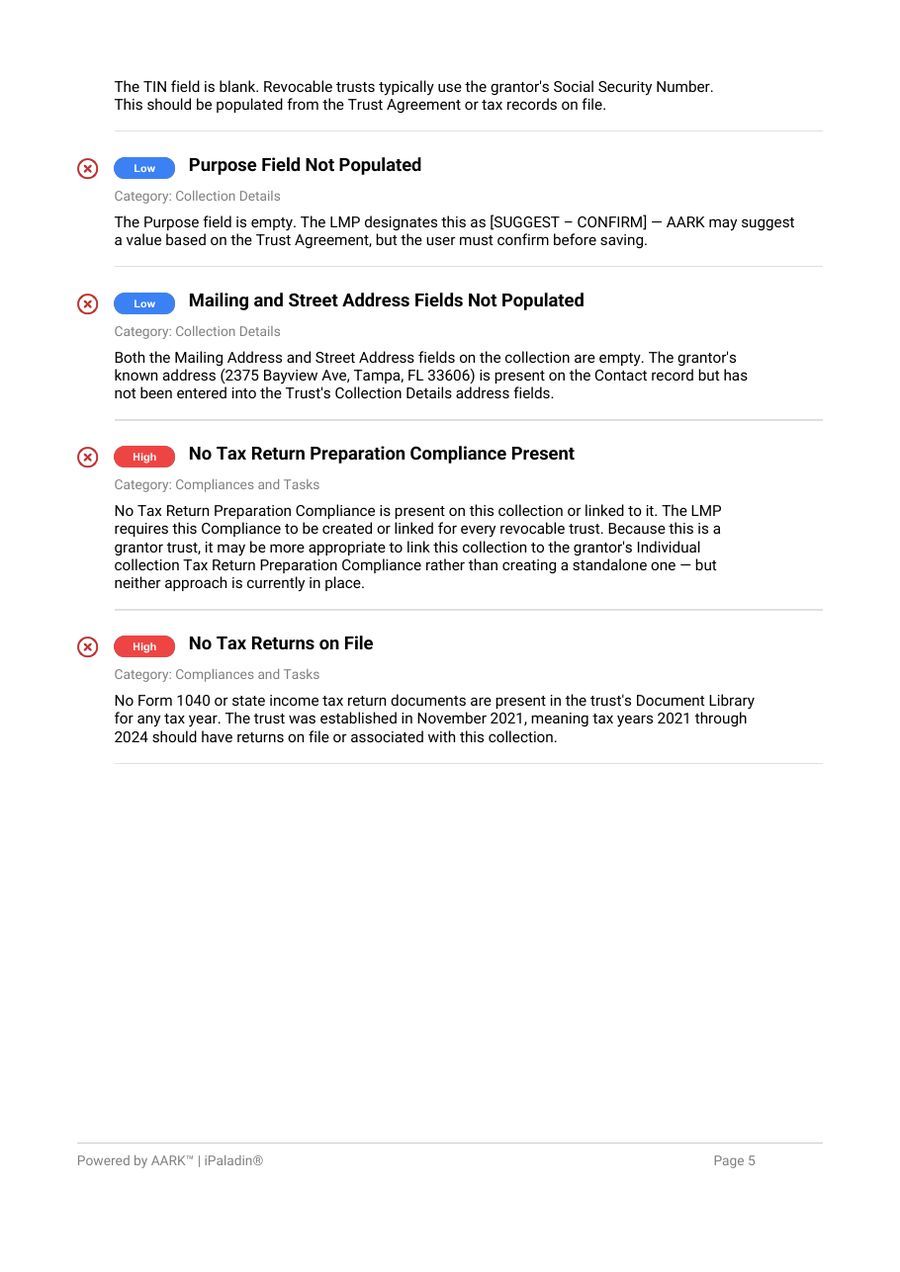
Every Lifecycle Management Plan carries its own Collection Review. The Collection is measured against the plan: the documents on file, the workflows completed, the workflows still pending, the identity, the authority and the owners.
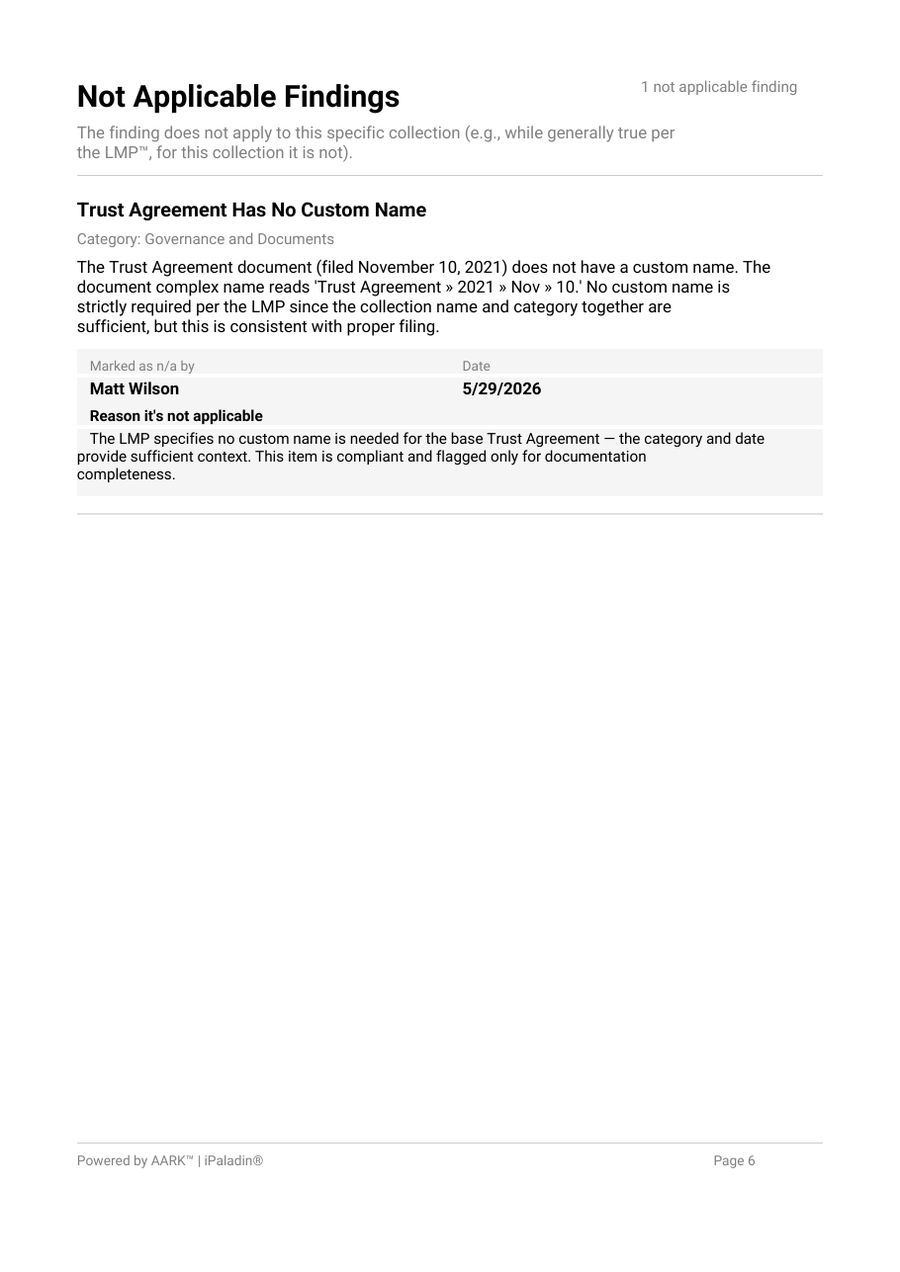
AARK™ presents the findings for the fiduciary to consider, clarify and edit. Rate a priority. Mark a finding not applicable to this Collection. Confirm one as a real exception. AARK™ learns the decision and carries it forward to the next review cycle.


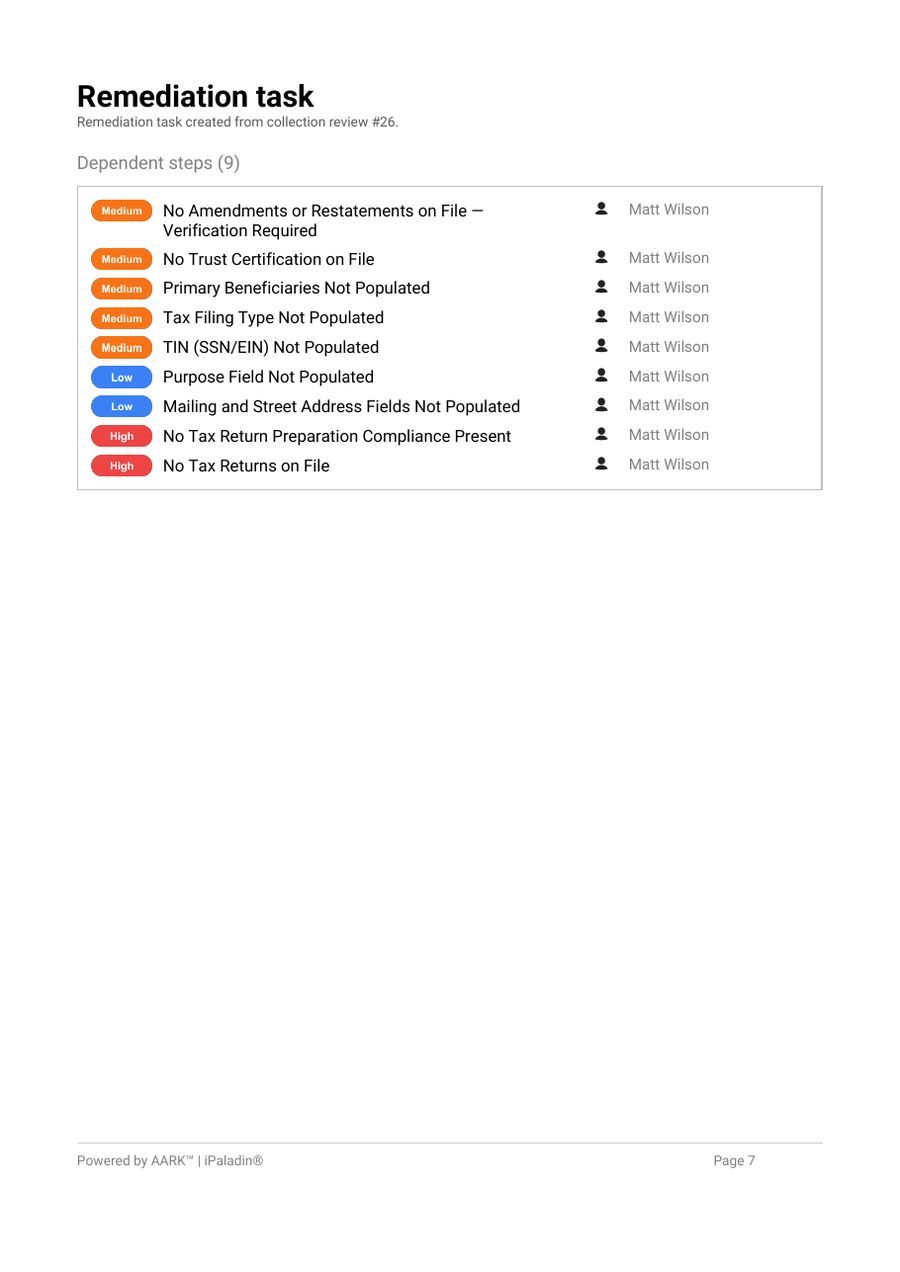
On confirmation the report is generated and the exceptions become dated, assigned Tasks. These reports are access controlled, since they are not needed by the broader set of users.
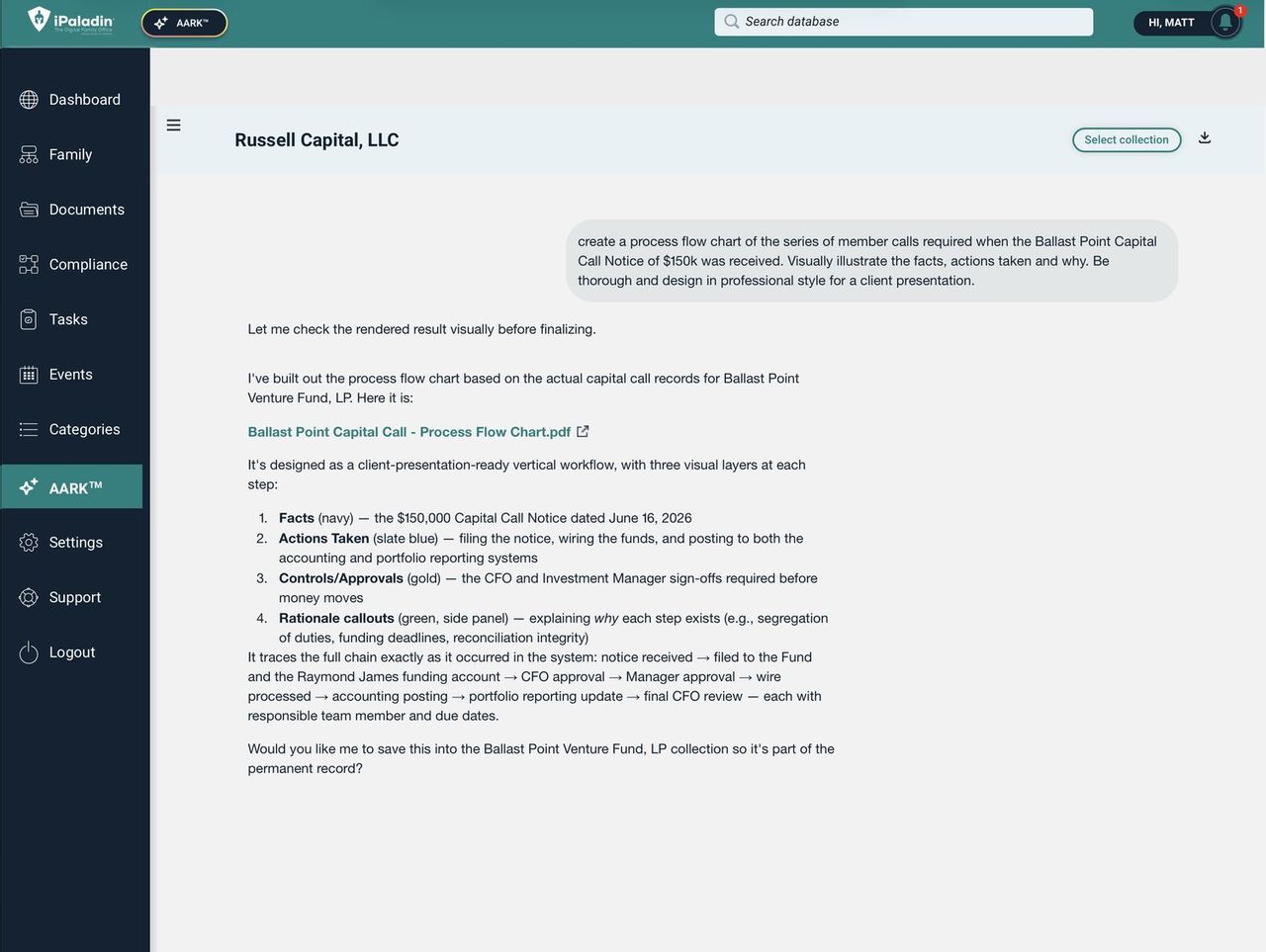
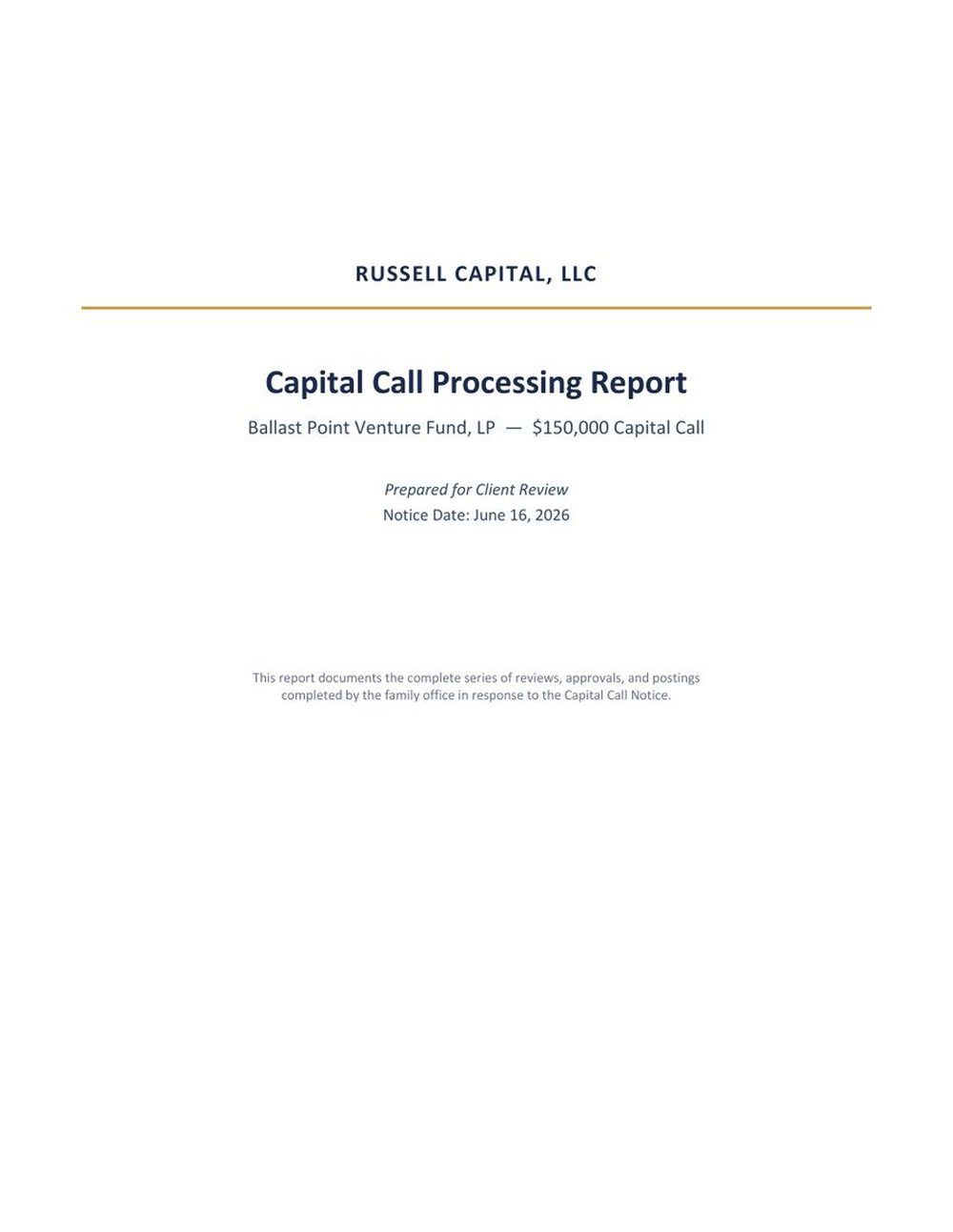
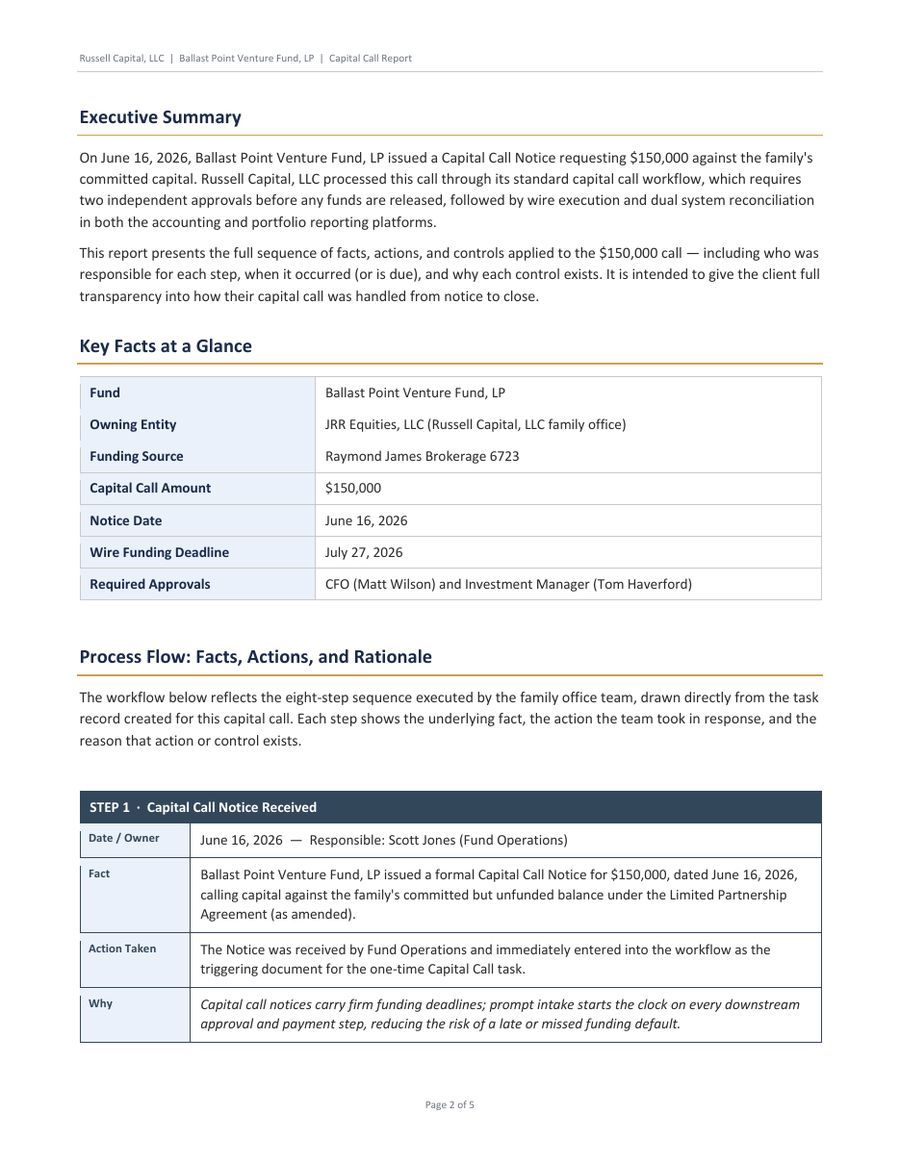
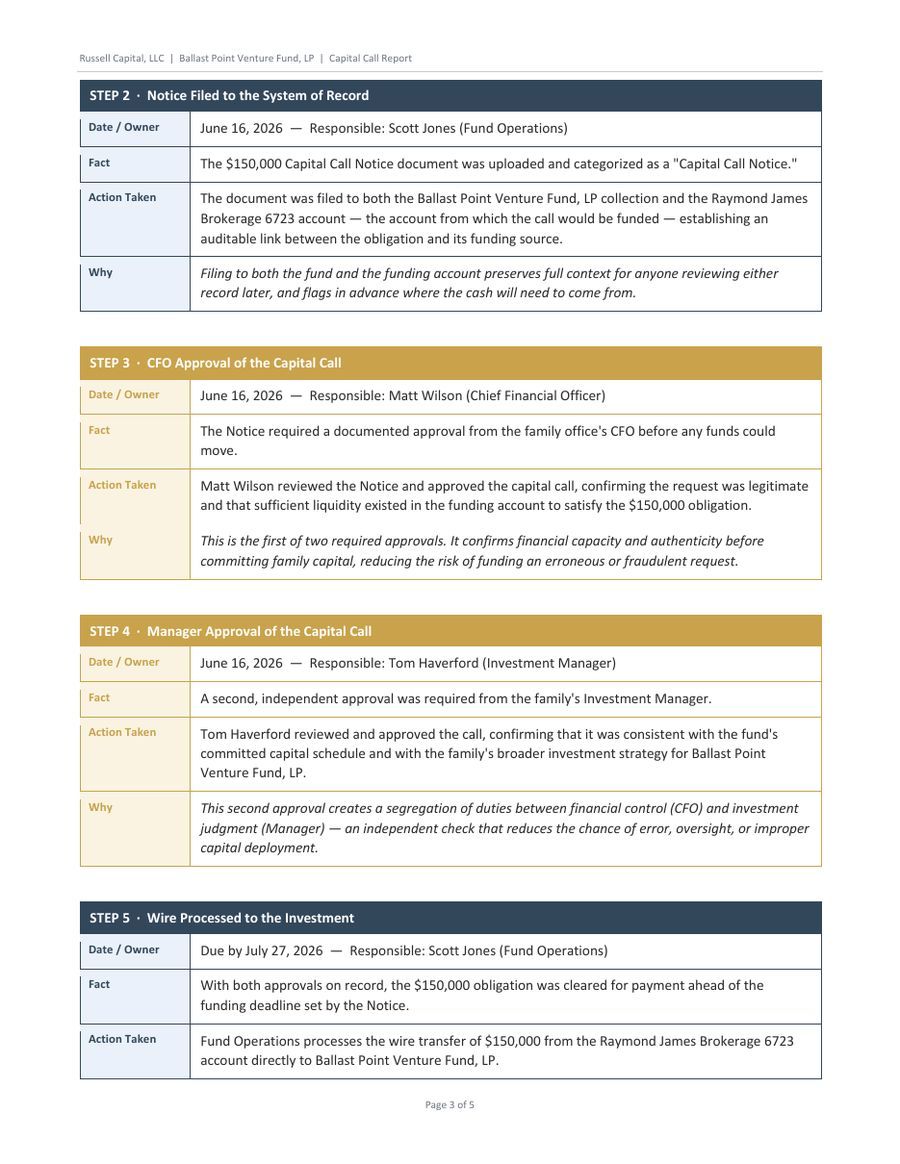
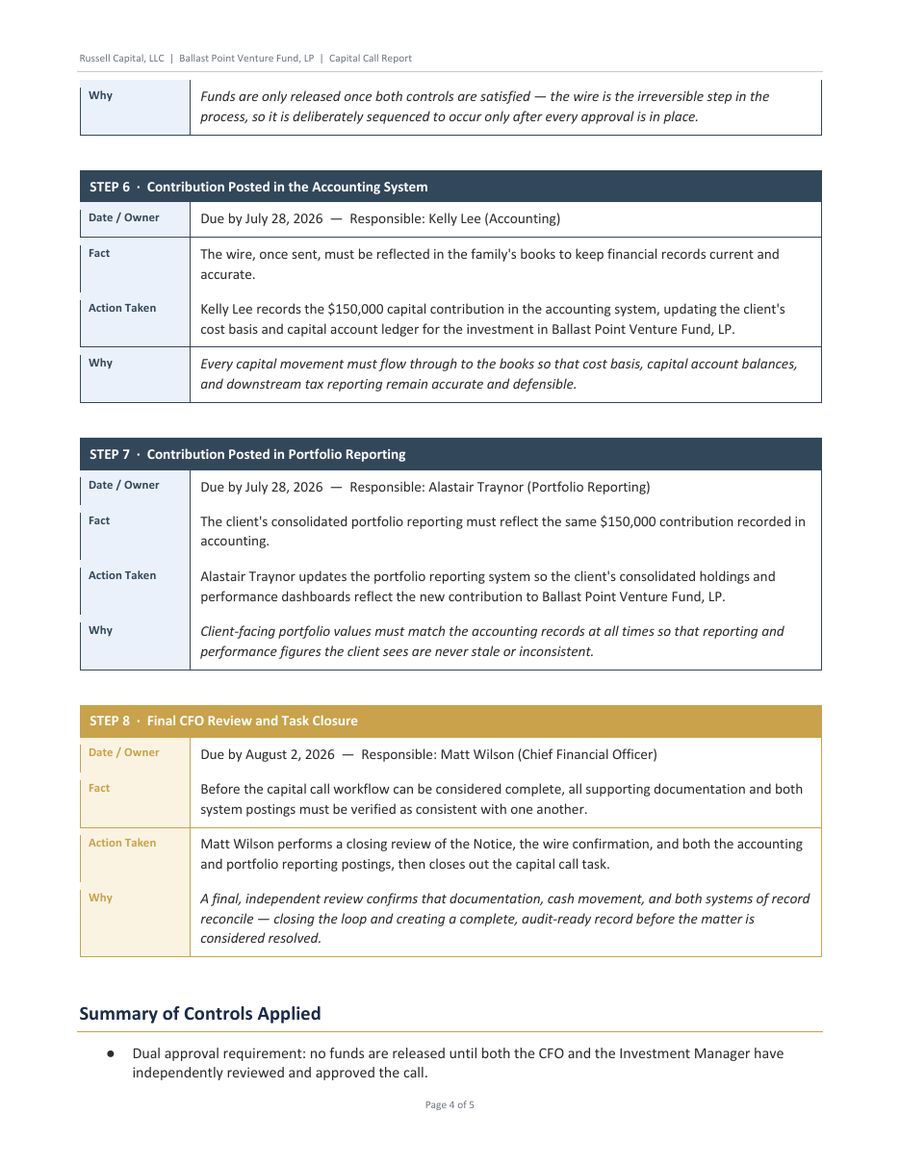
Ask for output and AARK™ returns finished files in Excel, Word, PowerPoint or PDF: a memo, a schedule, an enterprise or transaction report, a briefing deck, a process flow chart for a client presentation.


The report is not a summary of what AARK™ concluded. It is a record of how.
User accounts, permissions and system internal controls sit outside what AARK™ can touch. Those remain with the administrators the office names.
AARK™ holds the same permission boundaries a person does. It cannot grant itself access, and it cannot see a Collection it has not been given rights to.
Every action stops at a person, and every action is attributed to that person.
Collections, the four record types, and the structure AARK™ works inside.
Published to the dollar. Count your own Collections and check the figure before you speak to anyone.
Take the plates for sixty seconds, then issue an instruction and confirm it yourself.